---
createdAt: 2026-09-13
updatedAt: 2026-09-22
title: "Lingui vs Intlayer:2026 年基准测试与深度对比"
description: "在 Next.js 和 TanStack Start 上实测的两款基于编译器的 i18n 库。打包体积、内容泄漏、组件大小、水合性能、语言切换响应速度及开发者体验全面对比。"
keywords:
- Lingui
- Intlayer
- 国际化
- i18n
- 基准测试
- 打包体积
- 编译器
- 博客
- Next.js
- TanStack Start
- JavaScript
- React
slugs:
- blog
- lingui-vs-intlayer
author: aymericzip
---
# Lingui VS Intlayer | React & Next.js 国际化 (i18n) 基准测试对比

Lingui 和 Intlayer 是本次基准测试中仅有的两个依赖**编译器**而非纯运行时的国际化库。Lingui 在构建时从宏中提取消息,并为每个语言环境编译目录。Intlayer 按组件编译字典,并按语言环境进行 Tree-shaking。理论上它们的表现应当十分接近,但实际测试数据揭示了它们在哪方面走向了分歧。
测试数据来源于 [Benchmark Bloom](https://github.com/intlayer-org/benchmark-bloom),这是一个开源基准测试套件,它使用每个库构建完全相同的应用程序,并记录浏览器实际下载和执行的代码细节。
> **摘要 (tl;dr)**:在每页原始 JavaScript 下载体积方面,Lingui 最接近 Intlayer:在配置了延迟加载(lazy loading)后,TanStack Start 上为 **115-120 KB** 对 **118.6 KB**,Next.js 上为 **148.6 KB** 对 **141.3 KB**。但差距体现在其他维度:独立编译的 Lingui 组件体积高达 **58-153 KB**,而 Intlayer 仅为 **6-8 KB**;水合耗时 Lingui 需要 **28-34 ms**,而 Intlayer 仅需 **11-14 ms**;在所有优化设置中,源语言回退机制都会导致 **3-15%** 的英文内容泄漏到法语页面;而且要达到优化设置,必须手动按路由提取、编译和挑选目录。Intlayer 无需任何额外配置即可直接实现这些极致性能。
## 概要对比
- **Lingui** - 基于宏(`` t`...` ``、``、`msg`)、ICU MessageFormat 格式、`.po` / JSON 目录以及 `lingui extract` + `lingui compile` 规范工作流。将消息 ID 编译为短哈希,支持按语言环境动态加载目录。历史悠久、框架无关,围绕 `.po` 文件拥有强大的翻译工具链支持。
- **Intlayer** - 以组件为中心的内容模型。`.content.ts` 字典与所服务的组件同目录放置,构建时编译器自动按组件和语言环境进行 Tree-shaking 与延迟加载;根据内容自动生成严格的 TypeScript 类型,未翻译内容在构建时直接报错。内置中间件、SEO 辅助工具、可视化编辑器 / CMS 及 AI 辅助翻译。
| 库 | GitHub Stars | 总提交数 | 最后提交 | 首个版本 | NPM 版本 | NPM 下载量 |
| --------------------- | ------------------------------------------------------------------------------------------------------------------------------------------------------------------------------ | ---------------------------------------------------------------------------------------------------------------------------------------------------------------------------------- | --------------------------------------------------------------------------------------------------------------------------------------------------- | ------------- | ------------------------------------------------------------------------------------------------------------------- | ------------------------------------------------------------------------------------------------------------------------------ |
| `aymericzip/intlayer` | [](https://github.com/aymericzip/intlayer/stargazers) | [](https://github.com/aymericzip/intlayer/commits) | [](https://github.com/aymericzip/intlayer/commits) | 2024 年 4 月 | [](https://www.npmjs.com/package/intlayer) | [](https://www.npmjs.com/package/intlayer) |
| `lingui/js-lingui` | [](https://github.com/lingui/js-lingui/stargazers) | [](https://github.com/lingui/js-lingui/commits) | [](https://github.com/lingui/js-lingui/commits) | 2016 年 12 月 | [](https://www.npmjs.com/package/@lingui/core) | [](https://www.npmjs.com/package/@lingui/core) |
> 徽章会自动更新,快照数据随时间推移可能发生变化。
## 详细功能逐项对比
| 功能特性 | Intlayer (`react-intlayer` / `next-intlayer`) | Lingui (`@lingui/core` / `@lingui/react`) |
| --------------------------------------------- | --------------------------------------------------------------------------- | ----------------------------------------------------------------------------- |
| **翻译就近组件维护** | ✅ 支持,`.content.ts` 与每个组件同目录放置 | ⚠️ 源代码通过宏内联在 JSX 中;翻译分散在集中的 `.po` 目录中 |
| **TypeScript 深度集成** | ✅ 根据内容自动生成严格类型 | ⚠️ 宏本身有类型,但消息 ID 无类型支持,目录缺失条目无法在编写时标出 |
| **缺失翻译检测** | ✅ TypeScript 报错 + 构建时错误/警告 | ⚠️ `lingui extract` 输出统计信息;运行时静默回退至英文原文 |
| **富文本内容(JSX / Markdown / 组件)** | ✅ 原生直接支持 | ✅ 提供支持嵌套组件的 `` |
| **ICU 消息格式支持** | ⚠️ 正在演进中 | ✅ 原生支持(`plural`、`select`、`selectOrdinal` 等宏) |
| **格式化处理(日期、数字、货币)** | ✅ `useNumber`、`useDate` 等(底层基于 `Intl`) | ✅ `i18n.date()`、`i18n.number()` |
| **本地化路由与中间件** | ✅ 内置代理/中间件,提供 `getMultilingualUrls` | ❌ 非核心功能,无内置方案 |
| **SEO 辅助工具(hreflang、sitemap、robots)** | ✅ 内置全套开箱即用工具 | ❌ 需手动实现 |
| **同步服务端组件(RSC)** | ✅ `next-intlayer/server` 的 `useIntlayer` 支持在任意子服务端组件中同步使用 | ⚠️ 每个请求都需要一个 `I18n` 实例,需通过 Props 层层传递或使用 `setI18n` 设置 |
| **Tree-shaking(仅打包使用内容)** | ✅ 按组件、按语言环境,由编译器完全自动化处理 | ⚠️ 通过 `lingui compile` 实现按语言切分;按路由切分需手动拆解目录 |
| **延迟加载(Lazy loading)** | ✅ `importMode: 'dynamic'`(仅需一行配置) | ⚠️ 需手动 `import()` 编译后的目录并调用 `i18n.load()` / `i18n.activate()` |
| **清理未使用内容** | ✅ 废弃字典在构建时自动丢弃 | ✅ `lingui extract --clean` 可剔除过时消息 |
| **CI / 命令行缺失翻译测试** | ✅ `npx intlayer content test` | ⚠️ `lingui extract` 提供统计(默认不返回非零退出码) |
| **构建流水线** | ✅ 单一插件即可(`@intlayer/swc` / `@intlayer/babel` / `vite-intlayer`) | ⚠️ 需宏插件(Babel 或 SWC)加上独立的 `extract` 和 `compile` 步骤 |
| **AI 自动化翻译** | ✅ 内置集成,使用自备 API Key(OpenAI、Anthropic、Mistral 等) | ❌ 无 |
| **可视化编辑器 / CMS** | ✅ 提供免费 Visual Editor + 可选云端 CMS | ❌ 无(`.po` 文件依赖外部 TMS 平台) |
| **MCP 服务端与 Agent Skills** | ✅ 支持 | ❌ 无 |
| **生态系统与社区成熟度** | ⚠️ 较年轻但发展极其迅猛 | ✅ 历经长期检验,框架无关 |
## 性能基准测试
### 评测标准与设置
[Benchmark Bloom](https://github.com/intlayer-org/benchmark-bloom) 测试套件使用每个库构建**完全相同的应用程序**:**10 个页面**(home, about, blog, careers, contact, FAQ, pricing, products, settings, team),**10 种语言**(`en`, `fr`, `es`, `de`, `it`, `pt`, `zh`, `ja`, `ko`, `ru`),组件和内容完全一致。在 `en` 和 `fr` 下进行测量。每个库最多评估四种**加载策略**:
| 加载策略 | 策略说明 | 典型适用场景 |
| ------------------ | ---------------------------------------------------------------- | ---------------------------- |
| **static** | 所有语言环境编译后的目录一次性全量导入加载 | 快速原型开发、AI 生成代码 |
| **dynamic** | 仅通过 `import()` 载入当前活动语言的目录,但包含所有页面内容 | 大多数常规项目 |
| **scoped-static** | 按路由切分目录,但在初始化时全部打包进首屏 | 极少使用 |
| **scoped-dynamic** | 按路由拆解目录 + 延迟 `import()`。仅下载当前页面及当前语言的内容 | 对流量和体积有严格预算的应用 |
Intlayer 无需单独的 "scoped" 变体:编译器自动**按组件维度**界定内容范围,因此其 `static` 与 `dynamic` 行本身就已经实现了按需切分。
每项构建测试均记录以下核心指标:
- **Lib size**:仅导入 i18n 库的空组件的 gzip 体积(固定运行时成本)。
- **Page JS**:每页下载的 gzip JavaScript 平均体积(在所有页面和语言中取均值)。
- **Locale leak %**:下载的 JS 中,属于用户**当前未查看**语言环境的翻译文本比例。
- **Page leak %**:下载的 JS 中,属于用户**当前未访问**页面的翻译文本比例。
- **Component avg**:每个组件单独编译时的平均 gzip 体积。
- **E2E reactivity**:从选择新语言到 DOM 中 `html[lang]` 属性完成更新的挂钟耗时(Playwright,取 5 次测试均值)。
- **Hydration**:React 水合阶段的执行耗时。
> 以下数据来自 **2026-09-12** 的评测记录,测试版本为 `@lingui/react` 6.6.0 与 `intlayer` 9.5.1。测试应用规模精简(每种语言几十个字符串),因此泄漏比例反映的是一种**结构性规律**:随着项目内容增长,泄漏量将成正比放大。
### Next.js 测试结果
选择您关注的指标和库:
| 库 | 策略 | 库体积 (gz) | 页面 JS 平均 (gz) | 语言泄漏 | 页面泄漏 | 组件平均体积 (gz) | E2E 响应耗时 | 水合耗时 |
| ------------------- | -------------- | ----------: | ----------------: | -------: | -------: | ----------------: | -----------: | -------: |
| **base** (无 i18n) | - | 0.0 KB | 141.0 KB | 0.0% | 0.0% | 0.9 KB | 13.4 ms | 11.8 ms |
| Lingui | static | 11.9 KB | 207.4 KB | 50.0% | 90.0% | 73.3 KB | 15.3 ms | 15.2 ms |
| Lingui | dynamic | 11.9 KB | 145.4 KB | 2.8% | 89.9% | 19.9 KB | 15.7 ms | 12.7 ms |
| Lingui | scoped-static | 11.9 KB | 148.2 KB | 2.7% | 89.1% | 20.4 KB | 15.1 ms | 13.1 ms |
| Lingui | scoped-dynamic | 11.9 KB | 148.6 KB | 14.8% | 0.0% | 152.6 KB | 16.1 ms | 14.8 ms |
| **`next-intlayer`** | static | **5.5 KB** | **141.3 KB** | **0.0%** | **0.0%** | **8.5 KB** | 15.5 ms | 16.9 ms |
| **`next-intlayer`** | dynamic | **5.5 KB** | **141.3 KB** | **0.0%** | **0.0%** | **6.9 KB** | **15.3 ms** | 15.9 ms |
**数据深度剖析**
- **运行时固有开销。** 空组件下 Lingui 占用 11.9 KB gzip,Intlayer 仅占用 5.5 KB。整页对比中,Lingui 的最佳优化配置比 Intlayer **多出 7.3 KB**(148.6 KB 对 141.3 KB);而 Intlayer 比没有任何 i18n 代码的 Base 应用仅增加 **0.3 KB**。
- **初级配置开销惊人。** 一次性加载所有语言目录会导致**每页达到 207.4 KB**,比基础应用剧增 66 KB。其中一半翻译属于非目标语言,90% 属于其他页面。
- **动态加载仅解决了语言切分,未解决页面级冗余。** 单一语言全量目录方案中,页面泄漏率仍徘徊在 90% 左右:无论访问哪个子页面,整个法语目录都会全量下发。Lingui 要达到 0% 页面泄漏,必须采用 `scoped-dynamic`(手动按路由抽取、编译并在页面单独挑选)。
- **源语言回退导致的固有泄漏。** 即便在最佳配置下,**仍有 3-15% 的英文原文字符串被打包到法语页面中**。这是因为 Lingui 宏保留了原文字符串作为运行时安全回退。Intlayer 在构建期便彻底解决了回退关系,客户端仅传输目标语言。
- **`scoped-dynamic` 下组件体积急剧放大。** 隔离编译下的单个组件平均体积暴增至 **152.6 KB**,因为通过导入引用,该组件将所有路由目录全都牵连了进来。而在 Intlayer 中,同样的组件使用 `useIntlayer()` 平均仅有 **6.9 KB**。
> 完整表格、所有库和策略请参阅 [Next.js 基准测试报告](https://intlayer.org/zh/doc/benchmark/nextjs)。
### TanStack Start 测试结果
| 库 | 策略 | 库体积 (gz) | 页面 JS 平均 (gz) | 语言泄漏 | 页面泄漏 | 组件平均体积 (gz) | E2E 响应耗时 | 水合耗时 |
| --------------------------- | -------------- | ----------: | ----------------: | -------: | -------: | ----------------: | -----------: | ----------: |
| **base** (无 i18n) | - | 0.0 KB | 111.0 KB | 0.0% | 0.0% | 0.7 KB | 8.1 ms | 21.6 ms |
| Lingui | static | 11.2 KB | 152.2 KB | 50.0% | 90.0% | 58.0 KB | 3.9 ms | 19.9 ms |
| Lingui | dynamic | 11.2 KB | 115.2 KB | 9.3% | 0.0% | 85.5 KB | 5.9 ms | 28.0 ms |
| Lingui | scoped-static | 11.2 KB | 120.8 KB | 4.0% | 0.0% | 147.9 KB | 7.1 ms | 33.9 ms |
| Lingui | scoped-dynamic | 11.2 KB | 120.2 KB | 8.6% | 0.0% | 83.7 KB | 42.1 ms | 32.9 ms |
| **`intlayer`** | static | **5.0 KB** | **125.8 KB** | 50.0% | **0.0%** | **8.1 KB** | **3.2 ms** | **11.5 ms** |
| **`intlayer`** | dynamic | **5.0 KB** | **118.6 KB** | **0.0%** | **0.0%** | **6.3 KB** | 3.6 ms | **14.1 ms** |
| `@intlayer/lingui` (适配器) | dynamic | 10.3 KB | 137.0 KB | 9.9% | 0.0% | 12.8 KB | **2.9 ms** | 19.7 ms |
**数据深度剖析**
- **在单页 JS 体积上,Lingui 展现了微弱优势。** `dynamic` 策略下的 Lingui 录得 **115.2 KB**,比 Intlayer 的 118.6 KB 略少 3.4 KB。其经过哈希处理的编译目录极其紧凑,配合 TanStack Start 出色的路由拆分能力,使得其在 `dynamic` 阶段就能达到 0% 页面泄漏。
- **但在其他各项体验指标上,Intlayer 全面胜出。** 水合耗时 Lingui 需要 **28-34 ms**,而 Intlayer 仅需 **11-14 ms**:Lingui 的 `i18n.load()` + `i18n.activate()` 必须在客户端优先于 React 水合完成。单组件隔离体积 Lingui 为 **58-148 KB**,而 Intlayer 为 **6-8 KB**。由于回退机制,Lingui 的语言泄漏率始终无法归零。
- **优化配置下切换语言存在卡顿。** `scoped-dynamic` 下的 Lingui 耗时 **42 ms** 才能更新 `html[lang]`,因为新的路由目录必须经历网络请求、加载与激活才能反映在视图上。Intlayer 在两种模式下均稳定在 **3-4 ms** 极速完成。
- **Intlayer 的 `static` 模式已天然具备 0% 页面泄漏**,因为打包器只打包当前页面所渲染组件显式导入的字典。仅需增加一行配置(`importMode: 'dynamic'`)即可同时消除语言泄漏。
- **`@intlayer/lingui`** 允许开发者继续沿用 Lingui 宏语法,底层由 Intlayer 字典直接服务。它牺牲了少许整页体积(由于宏运行时驻留,为 137 KB),换取了大幅缩小的单组件(12.8 KB)和显著加快的水合速度。对于既有项目而言是非常理想的平滑升级通道。
> 完整表格请参阅 [TanStack Start 基准测试报告](https://intlayer.org/zh/doc/benchmark/tanstack)。
## 根本成因剖析:两个编译器,两种不同的工作单元

两款库都引入了编译阶段。核心差异在于它们究竟**在编译什么**。
**Lingui 编译的是目录(Catalogs)。** 源代码中的宏被提取到单语言的 `.po` 文件中,继而被编译为单语言的 JS 模块。它的工作单元是**语言环境整体(Locale)**。若想进一步细分(按路由或组件),就必须创建多个目录,并在 `lingui.config.ts` 中精细配置规则,手动控制每个路由的加载行为。其 `I18n` 实例是全局唯一的,每一个 `useLingui()` 都会将组件牢牢绑定在这个全局实例上。
```bash
.
├── lingui.config.ts
└── src
├── i18n.ts # setupI18n(), load(), activate()
├── locales
│ ├── en
│ │ ├── messages.po
│ │ └── messages.mjs # lingui compile 产物
│ └── fr
│ ├── messages.po
│ └── messages.mjs
├── components
│ └── Counter.tsx # const { t } = useLingui(); t`Increment`
└── routes
└── $locale
└── about.tsx # await import(`../locales/${locale}/messages.mjs`)
```
**Intlayer 编译的是字典(Dictionaries)。** 每个 `.content.ts` 文件都是一个绑定到特定键的独立字典。编译器自动分析哪个组件导入了哪个键,并在字典及语言两个维度精确产出该组件所必需的 JSON。它的工作单元是**组件(Component)**。路由级隔离只是自然产生的结果:一个页面只会请求所渲染组件的字典。
```bash
.
├── intlayer.config.ts
└── src
├── components
│ └── Counter
│ ├── index.tsx # useIntlayer("counter")
│ └── index.content.ts
└── routes
└── $locale
├── about.tsx
└── about.content.ts
```
这也是为什么 `scoped-dynamic` 模式在 Intlayer 中是自动生成的底层产物,而在 Lingui 中则是一项复杂的工程配置项目. 差距在页面和语言两个维度上同时拉大:

> 若要复现 `dynamic` 行的性能指标,只需在 `intlayer.config.ts` 中声明 `dictionary.importMode: 'dynamic'`。详见 [打包优化文档](https://intlayer.org/zh/doc/concept/bundle-optimization)。
## 开发者体验对比 (DX)
### 基础初始化
```ts fileName="lingui.config.ts"
import { defineConfig } from "@lingui/cli";
export default defineConfig({
sourceLocale: "en",
locales: ["en", "fr"],
catalogs: [
{
path: "/src/locales/{locale}/messages",
include: ["src"],
},
],
});
```
```ts fileName="src/i18n.ts"
import { setupI18n } from "@lingui/core";
export const loadCatalog = async (locale: string) => {
const { messages } = await import(`./locales/${locale}/messages.mjs`);
const i18n = setupI18n();
i18n.load(locale, messages);
i18n.activate(locale);
return i18n;
};
```
随后需在打包器中接入 `@lingui/babel-plugin-lingui-macro`(或 `@lingui/swc-plugin`),在源码更改后运行 `lingui extract`,在应用构建前运行 `lingui compile`,并使用 `` 嵌套根视图。
```ts fileName="intlayer.config.ts"
import { type IntlayerConfig, Locales } from "intlayer";
const config: IntlayerConfig = {
internationalization: {
locales: [Locales.ENGLISH, Locales.FRENCH],
defaultLocale: Locales.ENGLISH,
},
};
export default config;
```
在 `vite.config.ts` 中加入 `intlayer()`(在 Next.js 中使用 `withIntlayer()`),再用 `` 包裹组件树。无需独立的提取或编译命令行操作:启动打包器时字典自动完成编译。
### 组件内编写
```tsx fileName="src/components/Counter.tsx"
import { useState } from "react";
import { useLingui } from "@lingui/react/macro";
import { Trans } from "@lingui/react/macro";
export const Counter = () => {
const { t, i18n } = useLingui();
const [count, setCount] = useState(0);
return (
{i18n.number(count)}
);
};
```
英文文本直接书写在组件内;法语翻译由 `lingui extract` 提取到 `src/locales/fr/messages.po` 的哈希键下。如果开发者遗漏了提取或编译步骤,界面将静默显示英文原文。
```ts fileName="src/components/Counter/index.content.ts"
import { t, type Dictionary } from "intlayer";
const counterContent = {
key: "counter",
content: {
label: t({ en: "Counter", fr: "Compteur" }),
increment: t({ en: "Increment", fr: "Incrémenter" }),
},
} satisfies Dictionary;
export default counterContent;
```
```tsx fileName="src/components/Counter/index.tsx"
import { useState } from "react";
import { useIntlayer } from "react-intlayer";
import { useNumber } from "react-intlayer/format";
export const Counter = () => {
const { label, increment } = useIntlayer("counter");
const number = useNumber();
const [count, setCount] = useState(0);
return (
{number(count)}
);
};
```
各语言配置统一存放在组件同级的单文件内。缺少 `fr` 内容会引发编译阻断,输入错误键名会立刻收到 TypeScript 的错误提示。
### 组件树之外的环境
如路由元数据、加载器(loaders)、服务端执行函数等非 React 树环境。
```ts fileName="src/routes/$locale/about.tsx"
import { setupI18n } from "@lingui/core";
import { msg } from "@lingui/core/macro";
const title = msg`About us`;
export const loader = async ({ params }: { params: { locale: string } }) => {
const { messages } = await import(
`../../locales/${params.locale}/messages.mjs`
);
const i18n = setupI18n({
locale: params.locale,
messages: { [params.locale]: messages },
});
return { title: i18n._(title) };
};
```
每次调用都需重新实例化 `I18n`,手动导入正确的目录,并必须采用 `msg` + `i18n._()` 而不能直接写 `t`。正如 [基准测试记录](https://github.com/intlayer-org/benchmark-bloom/blob/main/report/NOTE.md) 所指出的,判断何时该使用 `t`、`` t` ` ``、`i18n.t()`、`msg` 还是 ``,非常不够直观。
```ts fileName="src/routes/$locale/about.tsx"
import { getIntlayer } from "intlayer";
export const loader = async ({ params }: { params: { locale: string } }) => {
const { title } = getIntlayer("about-metadata", params.locale);
return { title };
};
```
## 保留 Lingui 宏,接入 Intlayer 字典
`@intlayer/lingui` 是针对 `@lingui/core` 和 `@lingui/react` 的无缝兼容适配器。宏依然照常编译,底层调用的 `i18n._()` 直接由 Intlayer 字典提供支撑,同时配套的 `.po` 同步插件依然将现有目录视作单一事实来源。ICU 复数与条件分支渲染效果完全一致。
```ts fileName="vite.config.ts"
import { defineConfig } from "vite";
import { lingui } from "@intlayer/lingui/plugin";
export default defineConfig({
plugins: [lingui()],
});
```
构建流水线中保留 `@lingui/babel-plugin-lingui-macro` / `@lingui/swc-plugin`,确保其在 Intlayer 编译器之前执行。参阅 [Lingui 兼容适配器文档](https://intlayer.org/zh/doc/compatibility/lingui)。
## 该如何做出选型抉择?
如果您想要带有类型化宏的 **ICU MessageFormat**,您的翻译人员在已有 TMS 流程中使用 **`.po`** 文件,您喜欢在 JSX 中就近书写源语言字符串,并且您的团队乐于掌控提取 / 编译 / 目录拆分的工作流。配置好懒加载后,其每页 JS 体积非常有竞争力。
如果您想要**组件级作用域内容**、**严格的 TypeScript**、**构建期缺失键报错**、**零成本 tree-shaking 与懒加载**、微小的组件体积、快速注水、即时语言切换以及内置编辑工具([可视化编辑器](https://intlayer.org/zh/doc/concept/editor)、[CMS](https://intlayer.org/zh/doc/concept/cms)、[AI 翻译](https://intlayer.org/zh/doc/concept/auto-fill)、[MCP 服务器](https://intlayer.org/zh/doc/mcp-server))。特别适用于大型、模块化代码库与设计系统。
如果您已在使用 Lingui,并希望在无需修改宏代码的情况下渐进式迁移到 Intlayer 字典。您的 `.po` 目录通过 [PO 同步插件](https://intlayer.org/zh/doc/compatibility/lingui) 仍然保持为唯一事实来源。在 [Lingui vs @intlayer/lingui](https://intlayer.org/zh/blog/lingui-vs-intlayer-lingui) 中并排测试。
## 常见问题
因为编译的单元不同。Lingui **按语言编译单一目录**:其之下的细分(按路由分包、懒加载、将 fallback 排除在 bundle 之外)全部需要繁琐配置。Intlayer **按组件编译字典**,因此路由级作用域自然由构建器生成。这就是为什么单独编译一个 Lingui 组件体积高达 58-153 KB,而 Intlayer 仅为 6-8 KB。
宏会将源码中的原始消息保留为运行时兜底(fallback),因此英文文本会紧随翻译内容一同打包。基准测试在所有优化方案中均测得 `fr` 页面中含有 **3-15% 的 `en` 文本**。Intlayer 在构建期解析 fallback,并且只打包当前激活的语言。
是的,在 TanStack Start 上它甚至微弱胜出:`dynamic` 模式下为 115.2 KB(Intlayer 为 118.6 KB)。采用哈希 ID 的编译目录非常紧凑。但开销体现在其他方面:注水耗时 28-34 ms(Intlayer 为 11-14 ms),在 `scoped-dynamic` 配置下语言切换耗时高达 **42 ms**。
不需要。`@intlayer/lingui` 让 `` t`...` ``、``、`msg`、`plural`、`select` 和 `selectOrdinal` 保持原样编译;仅仅是 `i18n._()` 底层解析的数据来源发生了改变。在构建中保留 `@lingui/babel-plugin-lingui-macro` 或 `@lingui/swc-plugin` 即可。参见 [Lingui 兼容性文档](https://intlayer.org/zh/doc/compatibility/lingui)。
宏代码继续保留这两个步骤,但对于 Intlayer 自身的内容则完全不需要。`.content.ts` 字典在打包器运行时自动生成,无需单独的 CLI 命令,并且 [`intlayer test`](https://intlayer.org/zh/doc/concept/cli) 会在缺失键时直接让 CI 报错,而不是静默回退到源文本。
## 相关对比评测
相同基准测试,其他库:
- [next-intl vs Intlayer](https://intlayer.org/zh/blog/next-intl-vs-intlayer)
- [i18next vs Intlayer](https://intlayer.org/zh/blog/i18next-vs-intlayer)
- [vue-i18n vs Intlayer benchmark](https://intlayer.org/zh/blog/vue-i18n-vs-intlayer-benchmark)
- [next-i18next vs next-intl vs Intlayer](https://intlayer.org/zh/blog/next-i18next-vs-next-intl-vs-intlayer)
- [react-i18next vs react-intl vs Intlayer](https://intlayer.org/zh/blog/react-i18next-vs-react-intl-vs-intlayer)
深入了解:
- [Lingui vs @intlayer/lingui](https://intlayer.org/zh/blog/lingui-vs-intlayer-lingui), 在同一应用上实测的适配器
- [Compiler-driven vs declarative i18n](https://intlayer.org/zh/blog/compiler-vs-declarative-i18n)
- [Per-component vs centralized i18n](https://intlayer.org/zh/blog/per-component-vs-centralized-i18n)
- [ICU message format explained](https://intlayer.org/zh/blog/icu-message-format)
参考文档:
- [Next.js 基准测试报告](https://intlayer.org/zh/doc/benchmark/nextjs) 与 [TanStack Start 基准测试报告](https://intlayer.org/zh/doc/benchmark/tanstack)
- [Compat adapter: Lingui](https://intlayer.org/zh/doc/compatibility/lingui)
- [包体积优化](https://intlayer.org/zh/doc/concept/bundle-optimization) 与 [Intlayer 编译器](https://intlayer.org/zh/doc/compiler)
## GitHub 星标发展历程
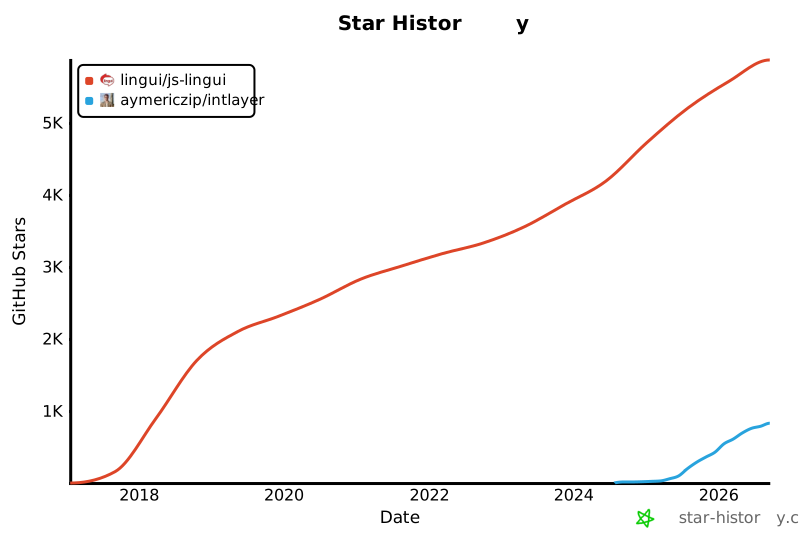
GitHub Star 是直观体现项目受欢迎程度、社区信赖度以及长期活力的风向标。尽管星标数不直接等同于技术优劣,但它生动反映了有多少开发者认可并乐于在项目中采纳该方案。
[](https://star-history.com/#lingui/js-lingui&aymericzip/intlayer)
## 总结
Lingui 毫无疑问是本次评测中最为强劲的“运行时+编译器”混合型库。其高度精简且哈希化的编译目录,使其单页 JavaScript 体积紧追 Intlayer,在 TanStack Start 上甚至实现了微弱的反超。如果仅仅把每页纯代码大小当成唯一指标,两者几乎可以打成平手。
但综合体验并非仅此一项。Lingui 的编译局限在语言环境这一级;其下的所有性能优化(按路由细分、延迟加载、剔除回退字符串)全部转嫁给了开发者的手动工程配置。基准测试清晰展现了这种边界所付出的代价:**组件体积放大 10-20 倍**、**水合变慢 2-3 倍**、**3-15% 无法根除的语言泄漏**,以及优化模式下 **42 ms** 的语言切换停顿。而 Intlayer 的编译器在组件粒度上展开工作,使得这些指标无需任何繁琐设置就能原生达到 **6-8 KB**、**11-14 ms**、**0%** 与 **3-4 ms** 的极致体验。
所有的原始测试数据、测试应用与执行脚本均已在 [Benchmark Bloom 代码仓库](https://github.com/intlayer-org/benchmark-bloom) 中完整开源。欢迎亲自克隆并运行验证。
欲了解更多设计哲学,请参阅 [“为什么选择 Intlayer?”文档](https://intlayer.org/zh/doc/why)。